
Data Market Regulations Come into Force in Kazakhstan
- Language
- Русский
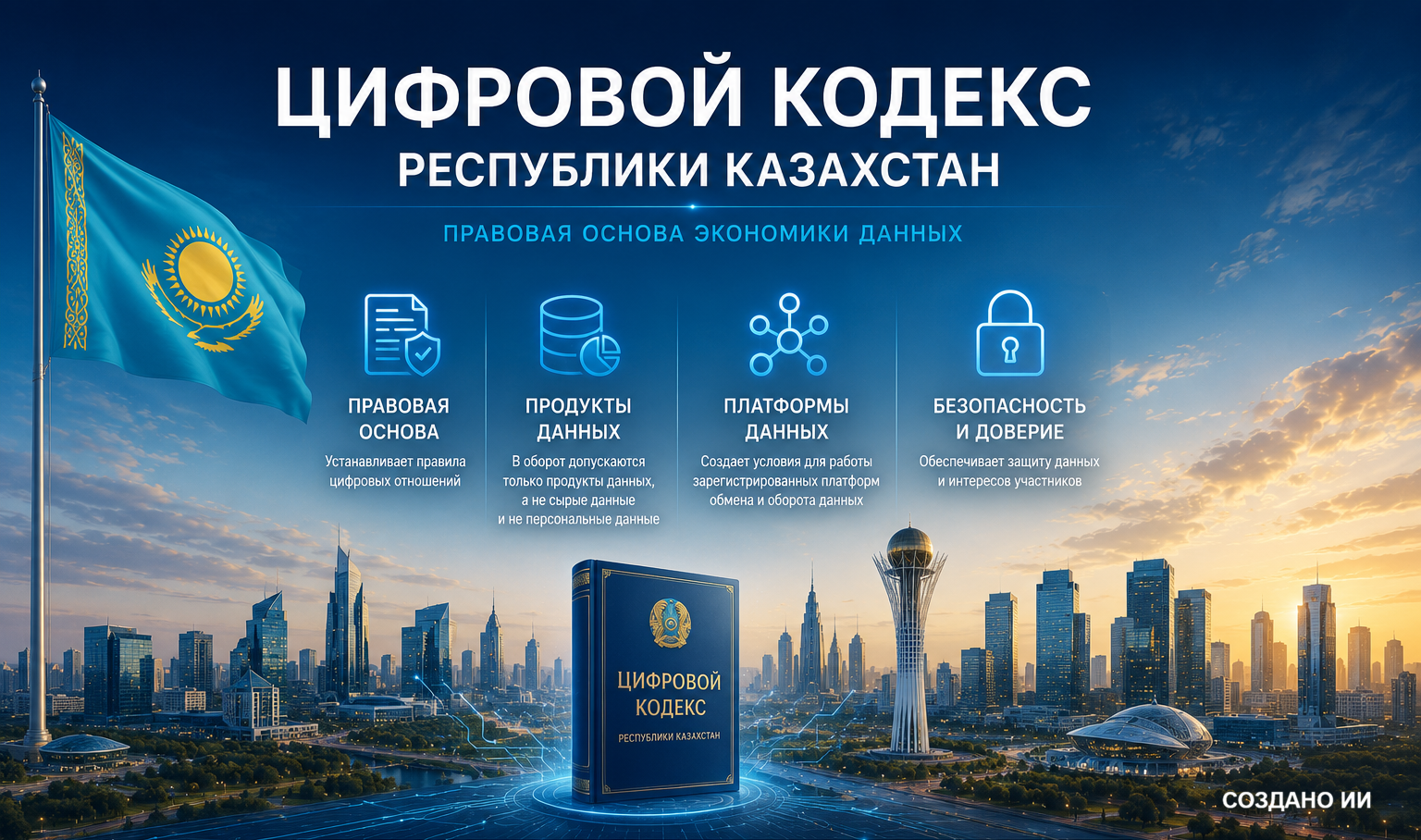
On 11 July, Kazakhstan’s Digital Code came into force. The Code introduces key elements of the data market, including digital data products, specialised platforms, a register of such platforms, transaction procedures, valuation methods and an authorised body responsible for the data economy.
Kazakhstan has become one of the first countries in the world to establish a dedicated legal framework governing the circulation of data products.
Companies can now turn their internal data assets into standalone products, assess their value and make them available to other market participants through specialised platforms.
The subject of market transactions is a digital data product, defined as a structured result of data processing that is suitable for use and commercial circulation. Such products may include datasets, analytical products, information dashboards, digital services or access through APIs.
A product can be transferred or made available under the terms established by its owner. The original data may remain with the provider, while the buyer receives agreed access and usage rights.
Certain restrictions also apply:
- The circulation of raw, unprocessed data, including personal data, is prohibited, except in cases предусмотренных by law.
- Each product must include information about its data sources, processing methods, update procedures, quality, limitations and level of anonymisation. The new system is designed to address three key objectives.
The first objective is to bring structure and transparency to existing data flows.
Data already generate revenue for companies through analytics, advertising, credit scoring and digital services. However, the terms of data usage are often unclear, and it can be difficult to trace how data reach their end users.
The register of specialised platforms, together with requirements for anonymisation, access and transfer to third parties, is expected to improve market transparency.
The second objective is to bring data currently isolated within organisations into economic circulation.
Transactional data, industrial indicators, transport flows and other sector-specific datasets are often kept within individual organisations, even though they may be valuable to other market participants.
These datasets can now be transformed into products and introduced into circulation through specialised platforms, where product descriptions are published, access levels are defined and transactions are recorded. This creates a market with clear usage rights and conditions.
The third objective is to turn data into a recognised economic asset.
In the future, data products may be recognised on corporate balance sheets alongside software, patents and licences. Their value could influence business valuations, while the products themselves could potentially be used as collateral to secure financing.
At the same time, a data breach can devalue a product and deprive a company of its revenue stream. This creates an additional incentive for businesses to invest in data quality, anonymisation, access control and cybersecurity.
What does this mean for the private sector?
- Data owners and providers can transform accumulated datasets into commercial products and generate revenue through licences, subscriptions or APIs. To do so, they need to list their datasets on a registered data exchange and circulation platform, where consumers can review available offerings and obtain access under established conditions. The register of such platforms will be maintained by the authorised body responsible for the data economy, the Bureau of National Statistics of the Agency for Strategic Planning and Reforms of the Republic of Kazakhstan.
When designing new IT systems, companies should consider the demand for the data they generate, its quality and its monetisation potential. This will help ensure a return on IT system investments, including through data monetisation.
- Data consumers can access unique datasets through these platforms, including industrial, transport, transactional and anonymised medical data. To do so, an interested company will need to register on the platform, identify relevant datasets and obtain access. If the required product is not available, the company will be able to submit a request for its discovery or development.
Overall, unique sector-specific datasets can give Kazakhstani companies a competitive advantage in global niche markets and serve as the foundation for export-oriented technologies, high-growth startups and future unicorns.
The next step for the market is to turn this legal opportunity into real commercial processes.